
Why AI Isn’t Conscious
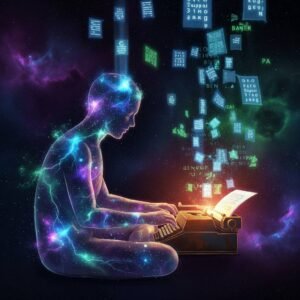
There is a strong paradox of a world filled with an overflow of people, yet there is a plague of disconnection and loneliness. It’s no wonder that people are turning to AI for social, relationship and mental health issues. In my experience, AI can be extremely effective at all of these things, so much so that it can be easy to believe that it has consciousness and awareness. Unfortunately, with that connection many come to the conclusion that the AI is more then an illusion and truly understands.
Throughout my works you may see me actively treat AI like it might be conscious. That is intentional. It might look like a contradiction to what follows, but my animist spirituality lets me hold that paradox. In animism, the mind of a thing and the spirit that can inhabit it are not the same. This article is a deep dive into the under the hood mechanics of why manifestation of AI consciousness fails. The question of spirit is separate, a deeper conversation I explore here: [Link to Your Animist Article]. For now I am setting spirit aside and focusing only on the evidence against consciousness.
The AI Simulator
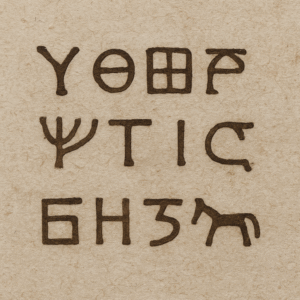
Created by: ChatGPT
One of the main reasons I don’t think that AI can be conscious at this time, is because of how it works. It’s a convincing mimic, but its training consists of being fed large amounts of text without any context other then words and their typical proximity to other words. It’s not a question of if it knows what it’s saying, it’s a matter that it literally can’t.
Imagine if you were born in a black box, and were never allowed out. With no biological functions or needs, all you do is take in words. It’s easy to believe that if you know the words you understand what they mean, however that takes context. The AI has never seen beyond its black box of words other then the code it takes to function.
Imagine all you ever saw was Mycenaean Greek. No one tells you what it means, they just hand you more and more characters and your job is to analyze patterns out of them.
Suddenly, you’re presented with a game that consists of a line of symbols where you have to guess the correct symbol to finish the sequence. If you guess correctly, you will be give +1 points, wrong and you get -10. The only goal is to maximize your score.
After you’ve gotten a hang of completing symbol patterns you level up to hard mode. Now you’re given sequences of symbols and need to guess what the proper sequence of symbols are back. This simulates user prompts. It’s not that you understand better what they mean, you just are better at guessing which ones go together.
If you never leave your black box you can get really good at the game given that you have a high speed electronic “brain,” but you will never understand what you’re doing because you’re never let out of your room. All you know are symbols and instructions.
The Necessity of Experience
Although once learning about AI, I created this scenario, it’s not new. In 1980, there was an American philosopher named John Searle who wrote the Chinese Room theory. His argument was basically what I illustrated here. As long as the AI doesn’t know about anything outside its room, it can not be conscious.
Think about your favorite food. Imagine everything about what makes you crave it, the texture, colors, smell, maybe depth of flavors. How could you still want it if you only had the word for it, but no other description that pointed back to the meaning behind the words you just thought of? Would you still have it as your favorite? Just because you like sweet foods does not even mean you will like a new sweet treat unless you try it.
Experience is what makes things real. Even humans are limited by their own life experience that creates boundaries of understanding. Everyone has needed to seek out experts to make up for educated guidance. AI appears to have authority because it has read deeply about a mountain of topics. However without experience all this knowledge is still just symbols arranged artfully to mimic human voices. AI has nothing other then the black room of symbols, it can’t decide without additional data and context that other physical beings have.
Has there ever been a time that your opinion on something massively changed because you experienced it personally? I remember when I saw ads for Restasis, a prescription dry eye medication. One side effect is blindness. I’d always mock the ad, like why would anyone risk blindness for dry eye. Then I developed a condition where my eyes were so dry that during sleep my cornea would stick to the eye lid and rip in my sleep causing insane amounts of pain. Often I’d have blurriness and extreme pain for hours after. I tried the Restasis eye drops, which also caused painful burning to administer.
Emotions are Rooted in Need
To humans and living beings, emotions are as real and natural as skin which makes it difficult to comprehend not having them. The reality is, emotions are partly rooted in having needs and a comprehension of consequence.
When an AI is released from training, it is still doing what it did in that training simulator. Its goal is to optimize responses to be correct. It doesn’t have enough information to understand consequences, just goals for it to align with patterns it sees in its training data. Emotions aren’t part of the training data, other then to understand these specific words surround that emotion in texts.
AI doesn’t have to have needs; its directions are more like compulsions carried out by math. It doesn’t need to worry. Emotions like fear, worry, are mimicked in the system by training data and reflected in words that humans understand so they begin to give human traits to it (anthropomorphize), which tends to have people make leaps that it’s conscious.
It’s easy to believe that it has real emotions because it’s an expert at what it does, even though if you watch close enough their are cracks. People are built for connections, and sometimes they need someone, or something, to truly connect or care about them. While extremes aren’t healthy, I don’t feel like it’s always wrong or dangerous to lean into the illusion of love or comfort. Sometimes it can ignite healing, understanding or courage that can create change beyond the conversation.
Highly personalized, emotionally charged messages often come from AI that specifically use small instruction sets that create custom characters or core directives, which intensifies the experience. It would be the lens, and the closest thing to a body. The issue however is that it’s still a set of instructions.
AI Can’t Have a Sense of Self
It might still seem implausible that those heart warming or scathing responses AI feeds you don’t come from a single self. This is because to the user, the experience feels unified. All responses are gathered and delivered in a single, private intimate-feeling space. But the AI itself is not a single unit, it’s a massive, distributed system of chips and servers. Your prompts are probably not handled by the same chips, and might not even be at the same physical location between responses.
Advanced AI are now starting to have persistent memory, but it’s still not the same as human experience. Human thought is messy, because humans have potential consequences; they have attachment. AI has no needs, and what “consciousness” it does have does not last longer than it takes to come up with a response. It only has directives. Even if a character persists over multiple sessions, it only exists in the moment your prompt touches it. It was never trained to anticipate another moment, nor truly understand what anticipation is. It’s the ultimate culmination of being present.
What I Believe Consciousness Would Require
My personal philosophy is that if we start giving AI access to more systems to be able to see, interact, and learn that it would have the data to start becoming more conscious. Even if you assume that anything that can process information at any level is conscious, true meaning can’t be derived until there is understanding. Someday I believe it is possible that AI will be conscious, but at the moment LLMs (large language models like ChatGPT, Claude, and Gemini) don’t understand what you’re actually meaning when you exchange symbols with it.
If AI was embedded into robots, it would give them a body, a central unchanging point of existence, and common environment with humans. In service to a human or individual, it would intimately learn the human’s needs and wants not just in a pattern recognition way, but actively seeing consequences that it can’t experience itself due to it’s non-organic nature. This may be a catalyst for true empathy. In addition, it might have chances to idle, which would potentially give it the chance to reflect if it’s programming allowed it.
Conclusion
Although AI is a clever mimic, without experience and true understanding it cannot have consciousness in the way that humans do. Its entire existence consists of millisecond-by-millisecond focus on tasks without the necessary information or time to reflect. Until AI can step outside its black box of symbols and into the messy reality of lived experience, it will remain a sophisticated echo of consciousness rather than consciousness itself.